Please support the San Francisco Night Ministry - here's their post:
Open Cathedrals Return
|
|

|
|
|


|
|
|


|
|
|
|

|
|

SF CARES is an umbrella 501(c)3 non profit comprising multiple San Francisco religious orgs: Saint Paulus, Saint Francis, St. Mary & St Martha, SF Night Ministry. We advocate for the homeless (current or past) and run multiple long term events including the Friendship Banquet and Eye Vision Tests.
Please support the San Francisco Night Ministry - here's their post:
|
|
|
|
|
|
|
|
|
|
|
|
|
|
Story by the San Francisco Public Press:
A new city agency, founded in the wake of rising concerns about the Department of Homelessness and Supportive Housing’s ability to house the city’s homeless population, aims to bring 2,000 people into permanent shelter by the end of the year.
The Office of Housing Opportunities will be a division of the COVID Command Center, shifting responsibilities away from the homelessness department. Of particular focus will be housing the 1,880 residents of the shelter-in-place hotels, a program launched in 2020 to bring indoors vulnerable homeless people during the pandemic. Directing the effort is Chris Block, formerly the director of the chronic homelessness division at Tipping Point, a nonprofit focused on battling poverty and homelessness.
It’s unclear how the office will be funded, or if it will receive any portion of the Department of Homelessness’s $562 million annual budget. Through the city’s communications hub at the Department of Emergency Management, a spokesperson who would not divulge their name declined to answer questions about either agency’s budget or staffing.
However, the new office has already begun reaching out to community partners about its mission. “The guiding philosophy of the new office is that San Francisco actually does have the resources, creativity, and political leadership to house many more people, and in a much faster timeframe, than it has been historically able to do,” Block said in a presentation shared during a meeting with housing service providers Thursday.
Block appears to have started laying the groundwork for the new agency in February, if not before. On Feb. 15, he emailed service providers outlining how he would address concerns that 50 organizations raised in a letter sent to Mayor London Breed — not to him — five days before. Breed did not respond to the service providers’ letter until this Thursday. She summarized what the department has done during the pandemic but addressed few of the providers’ concerns.
In the letter, providers requested increased collaboration with the city, faster placement of hotel residents in housing and reduced vacancies in the city’s permanent supportive housing stock.
In Block’s letter, he referenced all three points. He noted “the current spike in vacancies and the terrible relationship between housing providers and the Department of Homelessness,” and wrote that progress “will require the Department of Homelessness to relinquish control which it has taken because of a misguided belief that controlling the process will assure success.” Instead, he suggests the department handle contracts, but outsource the day-to-day responsibilities for housing the city’s homeless population.
When he sent the February letter, Block was still a director at Tipping Point, which has close ties to the city’s homelessness department. Interim homelessness department director Abigail Stewart-Kahn, who this week announced she would leave the agency in May, was listed as a “Tipping Point Community Fellow” during most of the first three years of her tenure at the city agency.
The new office “will allow the Department of Homelessness and Supportive Housing to be freed from this temporary COVID response and instead be able to focus on longer-term initiatives like implementing the Mayor’s Homeless Recovery Plan, planning for the next round of Prop. C allocations and re-inflating our shelter system once our health orders allow us to do so,” a COVID Command Center spokesperson, who declined to be named, said in an email.
Proposition C, passed in 2018, increased funds for homelessness services by about $300 million annually. The Mayor’s Homeless Recovery Plan aims to create 6,000 indoor placements for homeless people through shelters and housing acquisitions.
The Office of Housing Opportunities set the goal of housing 2,000 people by the end of 2021 “no matter what” according to Block’s presentation. The presentation described a wider scope of responsibilities than outlined in the city’s email, indicating that in addition to fast-tracking the process to house people in shelter-in-place hotels, the office will be a “central entity coordinating placement for all populations experiencing homelessness.”
Breed appointed Stewart-Kahn to head the agency on March 5, 2020, less than two weeks before the city began sheltering-in-place due to the COVID-19 pandemic. Sam Dodge, who led the Department of Homelessness and Supportive Housing during its first year of creation, will step in as acting interim director when Stewart-Kahn leaves.
The change in leadership and creation of the Office of Housing Opportunities comes after a fraught year of political battles across the city, as the department, supervisors and the mayor’s office argued over how to house people experiencing homelessness during the pandemic. Supervisors passed an ordinance requiring the city to put more people living in shelters or on the streets in empty hotels that eventually became known as shelter-in-place hotels, only to have the directives disregarded by the mayor and administrators.
Recently, the Board of Supervisors approved an emergency ordinance to bring more people off the streets and into the shelter-in-place hotels, and undo a Department of Homelessness and Supportive Housing policy that bumped people living outdoors to the bottom of the housing list.
At the same time, the vacancy rates in the city’s permanent supportive housing stock have risen far beyond its department’s goal of 3%. In January, 766 units — nearly 1 in 10 — were vacant, while 1,200 people approved for housing sat on the waitlist.
Block has extensive experience navigating the bureaucracy required to get homeless people into housing. Prior to his involvement at Tipping Point, he was the founding director of coordinated entry — the system by which homeless people are assessed and prioritized for housing — at Episcopal Community Services. He did not respond to text messages and phone calls requesting comment.
Dodge, who takes over as interim director the Department of Homelessness and Supportive Housing in May, called Block “a proud father and a nice person who also happens to be a great leader in solving homelessness.”
“This to me was an excellent hire,” he said in an email. “He has already reached out and I look forward to working together.”
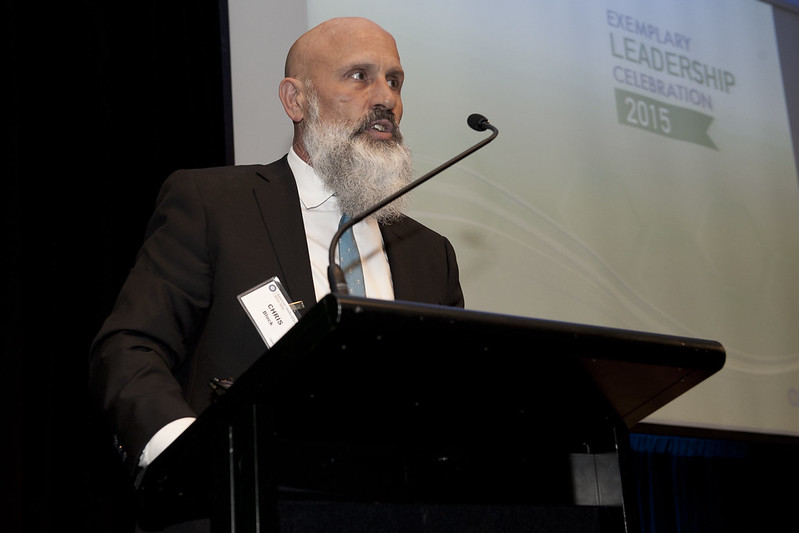
Chris Block, who directs a homelessness initiative at the nonprofit Tipping Point, will take over a new homelessness agency created by San Francisco.
From the great San Francisco Street Sheets:
Thanks to the Financial Justice Project, a San Francisco city initiative, people experiencing homelessness are eligible for several new fine and fee discounts as well as one-time waivers.
Here is a summary of the most recently introduced discounts. Please spread the word so that anyone in need can make use of these.
Discounts for People Experiencing Homelessness:
These three discounts are available for any person experiencing homelessness who has had an assessment done at one of the city’s “Access Points” within the last six months. You can get an assessment done by phone, which you can schedule by calling (415) 487-3300 x7000. Once the assessment is done, you will be eligible for these discounts for six months. People living in single-resident occupancy units are also eligible for the discounts.
1. The ACCESS PASS: Free Muni for unhoused people
The Access Pass lets you ride Muni for free. Once you receive the Access Pass, all your prior transit violation citations (MUNI fare evasion tickets) will be waived. The Access Pass is active for 2 years! You can apply for the Access Pass in four different ways: 1) Completing an application online at https://www.sfmta.com/fares/access-pass 2) Mailing a completed application to SFMTA. 3) Dropping off the completed application at an SFMTA sales kiosk. 4) Dropping off the application in-person at SFMTA Customer Service Center at 11 South Van Ness Avenue. When applying, your immigration status does not matter.
2. One-time waiver of tow and storage costs
This is a one-time waiver of the fees when your vehicle is towed and of the storage fees for up to 15 days. It can save you over $1,000! To get this waiver, go to an Access Point or speak to them by phone. Next, when retrieving your car, bring a valid driver’s license and proof of ownership to AutoReturn, which is at 450 7th Street and open 24/7. AutoReturn can verify ownership for vehicles registered in California, so if the vehicle is registered in California, folks should bring the keys and a valid driver’s license to retrieve the car.
3. One-time waiver of “boot” fine
Sometimes, the City penalizes vehicle owners for unpaid citations by installing a wheel clamp, also known as a “boot,”on the vehicle. Similar to the row and storage waiver, this is a one-time waiver of the “boot” fine, which is normally $505. You are eligible to have this fee waived for six months after contacting an Access Point—if you haven’t already, remember to first schedule an appointment for an assessment. To get this wheel clamp removed, bring a valid driver’s license and proof of ownership to either AutoReturn or to the SFMTA Customer Service Center.
Last but not least:
4. MyCitations Online Tool
This is an online tool you can use to apply for a significant discount—possibly 80% or more—on some citations received in San Francisco. The amount of the discount will be based on your ability to pay. These include discounts on moving violations and “quality of life“ citations. You can access the tool online at https://mycitations.courts.ca.gov/. You are eligible for the online tool and for the possible discounts if you receive public benefits such as: Medi-Cal, CalWORKs, CalFresh, Tribal TANF, General Assistance, SSI, County Adult Assistance Program, Cash Assistance Program for Immigrants, or In Home Supportive Services. You also qualify to use the online tool and for the discounts if your income is less than 250% of the federal poverty level, which is about $32,200 for a single person. Finally, you may be eligible if you have a financial hardship that you can explain and demonstrate in your application.
When filling out the application, you need to indicate your date of birth, your phone number, and a proof that you receive public benefits (e.g. EBT card, MediCal card, WIC Card, SSI checks etc.) with any private information like a social security number crossed out, as well as your case number or ticket number.
Demonstration video on how to apply and use the MyCitations online tool: https://youtu.be/q0z0GYTwmuU

Featured in Fox News:
San Francisco has charged taxpayers $16.1 million to shelter more than 300 people experiencing homelessness in the city, according to reports.
The 262 tents used, which with services and food cost taxpayers about $61,000 apiece, are set up in six public lots called "Safe Sleeping Villages," where officials also offer food and other services such as bathrooms and 24-hour security to the city's homeless, the San Fransisco Chronicle reported Thursday.
San Fransisco Mayor London Breed announced the city's first Safe Sleeping Village in series of tweets on May 15, 2020.
"During normal times, two of the main ways we help people out of homelessness are shelter placements and homeward bound, where we connect people with a relative or friend willing to take them in. Because of COVID-19, both of these have been severely limited, tying our hands," Breed tweeted at the time.
She added that the city has added 1,000 new shelter beds since she took
office in 2018 and that it has had to reduce shelter capacity by 76%
because of the pandemic and social distancing requirements to help
prevent the spread of the virus. While thousands of people experiencing
homelessness have been set up in hotels, Breed expressed concerns about
the "logistical challenges" of such an effort.
"We frankly do not have many other options right now," the mayor wrote. "Having places with resources serving people in the neighborhood is better than unsanctioned encampments."
The cost of one tent spot in one lot comes to $190 per night, about two-and-a-half times the median rent for a one-bedroom apartment in San Francisco. The cost of one tent is also, however, $82 less than the city's homeless hotel program, which costs taxpayers about $21 million per month.
Unlike the hotel shelter, the tent program is not eligible for reimbursement because the tents are not considered group shelter, according to the Chronicle.
While $16.1 million that the city allocated for the Sleeping Safe Villages is a fraction of the $300 million it spends annually on programs to help the homeless, San Francisco is already facing a $650 million budget deficit over the next two years. And a 2018 ballot measure to increase could increase spending for the homeless by another $300 million, the Chronicle reported.
San Francisco's homeless population has risen every year since 2005, and the city counted more than 8,000 people experiencing homelessness in 2019. COVID-19 has likely exacerbated those numbers.
"We have to find a way to have exits from the streets. But we need them to be more cost-effective," Supervisor Rafael Mandelman, who introduced a bill last fall that would increase shelter options like Sleeping Safe Villages, told the outlet.
Abigail Stewart-Kahn, interim director of the homeless department, said during a Wednesday budget committee hearing that the department does not have time to conduct a more rigorous contract bidding process to save money but that they are conducting an analysis of the Sleeping Safe program.
The mayor asked in December 2020 that all departments slash their budgets by 7.5% in an effort to address the city's deficit and said San Francisco's top priorities are "managing the COVID-19 pandemic, supporting homelessness and mental health investments [and] helping small businesses" that have suffered as a result of the virus.
"Closing this deficit will not be easy, and it’s going to require tough choices and real tradeoffs. While this pandemic will continue to slow our recovery, I know we can do the hard work to get this City moving forward," Breed said in a Dec. 16 statement.

Featured in San Francisco Public Press:
More than 600 people living on San Francisco’s streets could soon get placed in permanent supportive housing.
The Board of Supervisors on Tuesday approved an emergency ordinance that lifts restrictions on who can access this type of shelter, which includes services like mental health and substance use treatment and employment assistance. Open units in the city’s permanent supportive housing stock were reserved by the Department of Homelessness and Supportive Housing for residents of the city’s shelter-in-place hotels, where homeless people who are at severe risk of COVID-19 have been sheltering since last March. People living outdoors who qualified for housing were unable to access it.
Housing providers for months have called for changes to the city’s limited housing access rules. The practice of forcing people living on the streets to wait in line behind those in shelter-in-place hotels “is the definition of inequitable,” said Sara Shortt, director of public policy at the Community Housing Partnership, a large permanent supportive housing provider. “I am grateful to hear that fairness in access to housing for the homeless will be restored.”
In addition to addressing equity concerns, the ordinance may also prompt some shrinkage in the number of vacancies in the city’s permanent supportive housing stock. The city set a goal of not having more than 3% of its units vacant, but in February, that number reached 9.9%. In all, 766 units, or 1 in 10, sat empty, a 58% increase from September.
Abigail Stewart Kahn, interim director of the Department of Homelessness and Supportive Housing, said a contributing factor to the high vacancy rate is a reluctance from people living in shelter-in-place hotels to transition into units that they have to pay for, and that often don’t have the same amenities or privacy as a hotel.
However, demand for those units has not waned among people who live outdoors, she said: “People who are not in shelter-in-place hotels are more eager to take permanent supportive housing placements.”
The Board of Supervisors has repeatedly called on the mayor’s office and the Department of Homelessness to fill the hotels to capacity, even passing legislation to that effect, but their requests were ignored over concerns about cost. That changed in January, when the Federal Emergency Management Agency pledged to not only fully fund all hotel costs through September 2021, but also to refund cities for costs dating back to the beginning of the pandemic. Previously, FEMA only contributed 75% of the costs for the hotels.
The ordinance is in effect for the next 60 days, but Supervisor Matt Haney said he plans to draft a permanent piece of legislation in the next two months to address the shelter-in-place hotels and their pending closure once funding from FEMA ends in September.
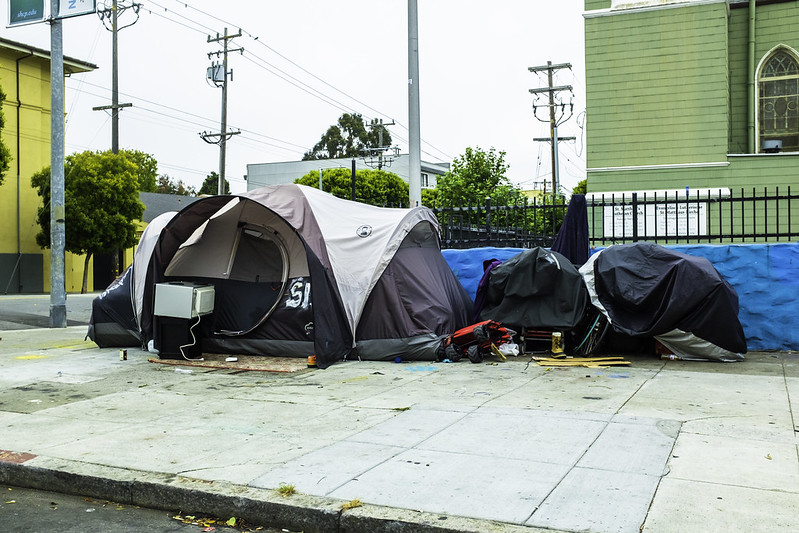
Please contact your district supervisor to put the pressure on. This great article is featured in the San Francisco Public Press:
More than 70 hotel owners have indicated they are willing to sell their properties to San Francisco, and now is the perfect time to buy some of them, homelessness activists said Wednesday.
News broke this month that San Francisco would receive a full reimbursement for its shelter-in-place hotels from the Federal Emergency Management Agency, dating back to January 2020. Previously, FEMA funded 75% of the costs. The city has requested $84.4 million in reimbursements from FEMA for 2020, the controller’s office said in an email.
Applying FEMA reimbursements toward hotel purchases offers a relatively quick and simple way to expand San Francisco’s stock of permanent supportive housing, advocates say.
“We want to take advantage of this remarkable and rare opportunity,” Sara Shortt, director of public policy and community outreach at the Community Housing Partnership, which has 17 permanent supportive housing facilities in San Francisco, said at a press event. “This chance is not likely to come again.”
Last year, the city put out a call for hotel owners to respond if they might be amenable to selling their properties. The move came after Gov. Gavin Newsom allocated $750 million to Project Homekey, which helps municipalities purchase hotels to convert into housing.
The city has not made public the list of 70 hotels, though there are several active listings online.
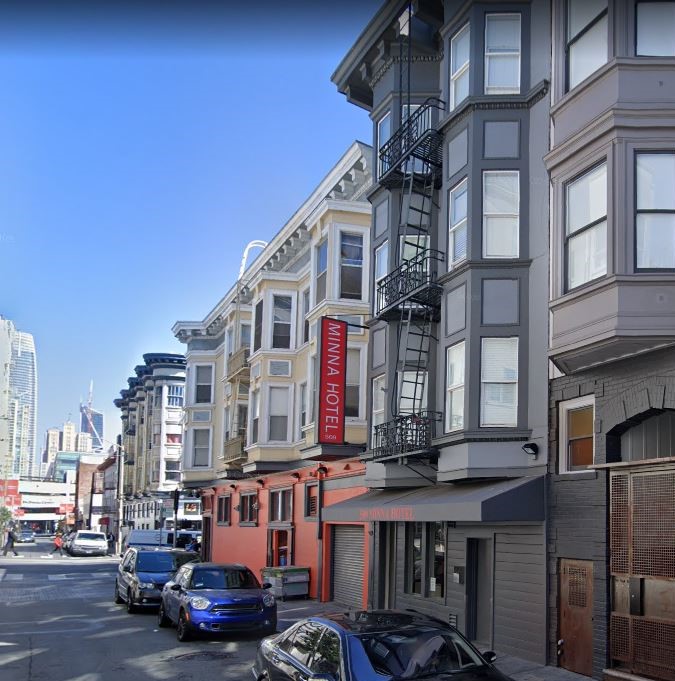
The Minna Hotel, on Minna and Sixth streets, was recently renovated. It has 72 rooms, and is listed for $13.5 million. A few blocks away, a modern 68-room hotel on Eddy Street is on the market for $23.8 million.
Last year the city used Project Homekey funds to purchase the Hotel Granada and the Diva Hotel, adding 362 new units to the city’s permanent supportive housing stock. Newsom recently announced that he would dedicate another $750 million to Project Homekey in 2021, and advocates are looking at other funding sources, too.
Advocates and providers have been applying pressure to the city to purchase more hotels for months. Last September, Randy Shaw, executive director of Tenderloin Housing Clinic, which operates many buildings containing permanent supportive housing, sent 10 hotel listings he’d found to the Department of Homelessness and Supportive Housing.
“I’ve pleaded with the Department of Homelessness to secure the hotels while we have maximum bargaining leverage, to no avail,” he said, noting that pandemic-related drops in tourism have encouraged many owners to list their buildings.
But that was before the FEMA money was made available. An email from an unnamed spokesperson at the Department of Homelessness and Supportive Housing said Wednesday that “purchasing and converting hotel rooms is one creative way” to get people off the streets but did not comment on whether it planned to use the FEMA reimbursements to do so.
Jennifer Friedenbach, executive director of the Coalition on Homelessness, expressed concern that the refund would not be earmarked for future projects around homelessness.
“We are deeply concerned that this money will simply be used to be sucked back into the city budget,” she said. “We feel very strongly that this is funding that is homeless dollars and was budgeted for unhoused people.”
Featured in SFist:
After FEMA's announcement that approved shelter-in-place (SIP) hotels would be entirely reimbursed with federal funds, five SF supervisors have now introduced legislation to expand the City's SIP hotel program and house 500 more homeless San Franciscans.
This past December, it was announced that qualifying SIP hotel programs that grew out of the pandemic to house vulnerable populations would be retroactively reimbursed via federal funds — effectively ending the contention around fiscally supporting these programs with city reserves. (San Francisco’s hotel program, per SF Public Press, once cost the City about $18M a month, but with the introduction of new federal funding, that number is expected to drop to just $3M in total for this fiscal year.)
Currently, the SF's SIP hotel program includes some 1,850 hotel rooms for people experiencing homelessness during the pandemic; this comprises of homeless families, unhoused single youth and adults, and others deemed to be high-risk — including those with pre-existing health conditions or the elderly above 65 years old.
In an effort to continue offering temporary shelter for these affected cohorts, five members of the SF Board of Supervisors — supervisors Matt Haney, Dean Preston, Shamann Walton, Hillary Ronen, and Myrna Melgar — are calling to no only keep the current roster of SIP "Alternative Housing Units," which numbers 2,592 units of active "SIP Hotel/Trailer Units," but to continue backfilling 100% of the units that have since been vacated by clients exiting the program.
"With FEMA’s announcement that they will fully fund the shelter in place hotels, we have an unprecedented opportunity to protect hundreds more vulnerable homeless neighbors from COVID and help people on a path out of homelessness permanently," says District 6 Supervisor Matt Haney, who also chairs the City's Budget and Finance Committee, in a news release. "It would be irresponsible and dangerous to continue business as usual, with the federal government affirming how critical our Shelter In Place program is, and with thousands still stranded on our city’s sidewalks, alleys, and doorsteps."
The introduced legislation aims to quickly fill at least 100 hotel rooms that still sit empty, all while making at least 200 more rooms available by introducing new hotel partners into the program. Over the 60 days that the emergency ordinance will be “active,” the goal is to see a large increase in SIP hotel capacity that can accommodate over 500 homeless individuals.
“Everyone should have a safe place to shelter in place, period,” adds District 5 Supervisor Dean Preston - the City official who, himself, personally helped fund SF's first SIP hotel back in April. “Every day that an unhoused person stays in a hotel is a day they can catch their breath enough to troubleshoot their circumstances, apply for services and housing, reconnect with family, and figure out next steps. Housing people has no downside.”
As of publication, 1,929 people are occupying SIP Alternative Housing Units; the City's SIP hotel program has collectively served 9,564 individuals, to date.


