Tuesday, May 4, 2021

Homeless veterans start new lives in S.F. apartments

Featured in the San Francisco Chronicle:

'I felt like I won the lotto'

From her third-floor apartment in Mission Bay Margie Talavera can hear the foghorns blowing early in the morning.

As a city native who spent six years in the Navy, the sound is a comfort. It’s as San Francisco as cable car bells ringing or sea lions barking at Pier 39.

“Forget about it,” said Talavera, 66. “You hear those sounds and you know you are in San Francisco.”

Talavera is one of 69 veterans who moved 14 months ago into the Edwin M. Lee Apartments in Mission Bay, an affordable housing complex that is the first focused on veterans in 10 years.

The building opened in February 2020 at the beginning of the COVID-19 crisis. It offers 62 units of housing to formerly homeless veterans and 57 apartments to very low-income families. It’s the first San Francisco building that mixes homeless veterans housing with family units. The $78 million project is a joint venture between Chinatown Community Development Center and Swords to Plowshares.

Talavera, who served in the Navy in the 1970s, fell into homelessness after a stint as a letter carrier for the United States Postal Service. Even with a small pension and Social Security, she could not afford to rent an apartment in the Bay Area. She was couch surfing with her siblings in the East Bay and Napa between stretches of homelessness in San Francisco. She slept in churches, cars and tents.

“When you are on the street, all of a sudden a tent is an upgrade from the sidewalk. And then a car is an upgrade from a tent.”

Prior to becoming a letter carrier Talavera worked as a waitress, landscaper, factory worker and spent nine years as a clown for the Ringling Brothers circus, traveling all over the United States and Japan. A social worker with the Veterans Administration told her about the building — while she didn’t hold out much hope that she would land a unit she figured it was worthwhile filling out the paperwork and she made sure to show up to appointments with her VA case worker.

Residents in the Edwin M. Lee Apartments are single and formerly homeless veterans with disabilities and low-income families from a variety of backgrounds. On-site supportive services are provided by Swords to Plowshares, Chinatown Community Development Center and the Department of Veterans Affairs.

Malcolm Yeung, Chinatown CDC’s executive director, said that it’s appropriate that the building is named after Mayor Lee, who passed away in 2017.

“(Lee) brought affordable housing into the center of our collective consciousness as a city and allowed the local policy to work in favor of affordable housing,” said Yeung.

In addition to Swords to Plowshares’ existing supportive housing programs, which provide homes to hundreds of veterans each year, Edwin M. Lee Apartments will contribute to San Francisco’s efforts to significantly reduce veteran homelessness.

“After 45 years serving homeless and at-risk veterans in San Francisco, we know that stability and the path to recovery start with housing,” said Swords to Plowshares Executive Director Michael Blecker. “For veterans who suffer from poverty, lack of support network, PTSD and other disabilities, permanent supportive housing is the solution that will save their lives.”

The building comes as Mission Bay, a planned community constructed on a former railyard, is nearly fully built out. So far 6,060 housing units have been completed, of which 1,456 are affordable. Two more affordable projects are in the pipeline: 141 units for formerly homeless, expected to be complete in 2022, and 148 affordable homeowner opportunities, expected to start construction next year.

Reggie Barham, an Army vet, moved into the building on March 6, 2020. Before landing the unit he spent his nights walking the city.

“I had been awake for a month,” he said. “I just couldn’t stay in shelters. I never felt comfortable in shelters.”

Barham, 59, who spent his childhood in Ohio, Los Angeles and San Francisco, said he struggled with drug and alcohol addiction for much of his adult life. In addition to three years in the Army, he worked as a merchant marine in Texas and Louisiana. He was a security guard in downtown San Francisco, including at the Transamerica building. He is a licensed barber and has cut hair at barbershops in multiple cities.

Affordable housing advocates often talk about “housing first” — the concept that it’s difficult to tackle substance abuse or mental illness before you are housed. While housing may not always be the secret to ending addiction, it was for Barham. He said that he had been ready to get sober for several years before moving into the Lee Apartments, but that being homeless made that tough. Once he had his own place, he found it easier.

“I just stopped. I didn’t go to any meetings. No church basements. None of that. I was just sitting right here gave me a sanctuary where I can fight my own demons,” he said. “A place like this that is my own is the only thing that really helped. My thought pattern changed. It was a perfect time for me to have a little place to deal with my own life, to get right with my higher power. That is where I am today.”
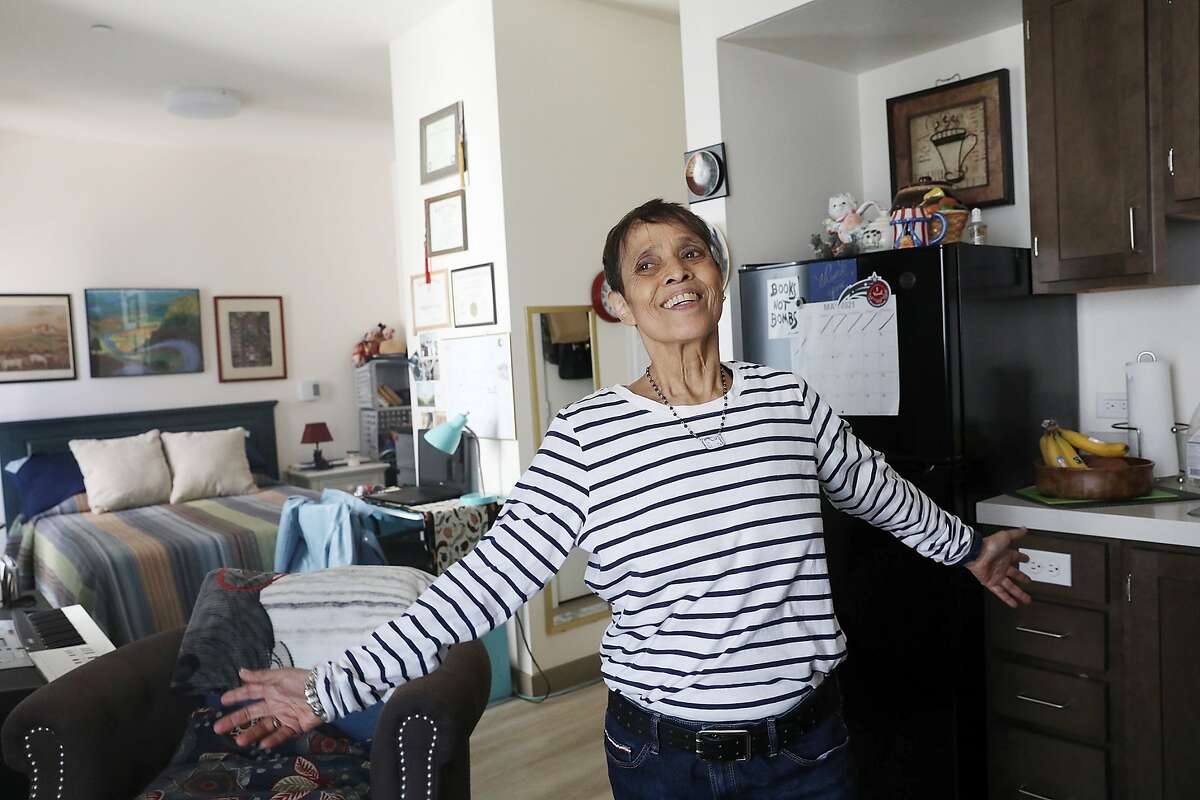
 

Margie Talavera says she is grateful everyday and starts her day with a thought of gratitude in her apartment at the Edwin Lee Apartments on Monday, May 3, 2021 in San Francisco, Calif.


Wednesday, April 28, 2021

The City Hall Lunacy Continues - $5k p/m for homeless tents!!

Please read this article and share. Please also note the part in red - explaining the absolute sheer incompetence that our leaders would prefer to spend $5k per homeless person per month to live in a tent, versus $1400-2000 for a studio apartment. This article is featured in KCTV5 (CBS):

City may spend hundreds of millions on sleeping sites for homeless

SAN FRANCISCO (KPIX) -- The San Francisco Board of Supervisors is currently considering spending hundreds of millions of dollars to have homeless people sleep in tents on city property, it’s an expansion of the so-called ‘safe sleeping sites’.

Critics say this legislation would prioritize tents over actual housing.

“The pandemic has been hard on everyone, but if you’re currently unhoused, it’s been so brutal,” Kelley Cutler, a Human Rights Organizer with the Coalition on Homelessness said. She opposes the legislation.

“The cost is more than housing, why would we put that money toward tents and encampments when we can be actually getting folks into housing?” Cutler said.

Cutler doesn’t oppose the concept of safe sleeping sites, but she also doesn’t want to see them on a larger scale given how expensive they are.

The current estimate for each tent is $5,000 a month or $61,000 a year, this includes security, bathrooms and clean water. Currently there are around 260 tents in these sites and could cost San Francisco $16 million this year.

“So what this legislation does is ask us to focus on the people who we may not be able to provide a home for, or even a traditional shelter for we have to have something for those folks,” Supervisor Rafael Mandelman said.

Mandelman’s legislation called ‘A Place for All’ would require the city to create enough of these sleeping sites for every single homeless person in San Francisco who doesn’t have shelter.

It will also give the city the right to clear out individual encampments if they can offer an alternative sanctioned location. Mandelman argues it will save small businesses and make neighborhoods safer, like the Castro District that he represents.

“We have to come up with a way of addressing our homelessness crisis in this city that doesn’t require neighborhoods to have to have large encampments in the middle of their neighborhoods, right outside small businesses, they’re struggling to survive. I think we can do better.” Mandelman said.

Cutler says this is really just an enforcement tool masquerading as a solution.

“We already have a lot of enforcement going on but what happens is that it just shifts people from one block to the next, because people don’t just disappear,” Cutler said.

She argues this is more a solution for visible homelessness, hiding the problem from the public eye rather than actually prioritizing solving homelessness and getting people housed.

She worries this could make San Francisco look more like New York City, where the city spends $1.3 million a year on shelters that many never move out of.

“I know folks in New York that are living in the shelter system and, and their concern, and it’s very valid concern, is that they’re stuck that there aren’t housing exits,” Cutler said.

Opponents also worry that this would be funded with Proposition C money. Prop C was approved by voters in 2018 as a tax that is expected to generate $250-$300 million a year toward solving homelessness money intended to go toward permanent housing.

“I see their point but as a neighborhood supervisor representing neighborhoods heavily impacted by street camping I don’t think it is right to ask folks to camp in our neighborhoods and I don’t think it’s right to ask folks in those neighborhoods to accept street camping,” Mandelman said.

Mandelman says without support from the federal government this is the only realistic way he can see San Francisco attempt to solve this colossal crisis on its own.

“I think we have to be honest about what the city can provide, what problems we can solve and if we can’t solve the problem with a long-term solution, like housing for everyone, which we would all want to do as good San Francisco liberals, we have to figure out what is the city we can do that is better and more humane than what we’re doing,” Mandelman said.

The Coalition on Homelessness says its not against safe sleeping sites as a concept just against them on a mass scale. Supervisors will take this up Wednesday in the budget and finance committee.


A Tour of My San Francisco Studio Apartment – Advice from a Twenty Something


Tuesday, April 20, 2021

Help for Rent Relief - Please Read and Share

Featured in the San Francisco Public Press:

Seeking Rent Relief? State Says Apply Now. Here’s How.

San Francisco residents who are behind on their rent and other housing costs could soon get financial relief, thanks to government programs designed to help those who qualify.

To get assistance as quickly as possible, San Franciscans should apply now through California’s program to distribute federal stimulus money, which opened in March, said Geoffrey Ross, deputy director for federal financial assistance at the California Department of Housing and Community Development.

The city is developing its own program, which will dovetail with the state’s by providing assistance where its counterpart does not, but it isn’t slated to open until May, the San Francisco Chronicle reported.

Once the local program is live, the state will “be able to seamlessly migrate folks who should go to the city program,” Ross said, and City Hall will likewise share applicant information when appropriate. People are expected to get the same assistance regardless of where they apply.

How to apply

To apply, go to the state’s web portal and select whether you’re a landlord or renter. After specifying where you live and answering basic questions about your situation, you can register with the state’s program and then fill out the online application.

To be eligible, renters must have incurred financial hardship due to COVID-19 and show that their housing situation is unstable — for example, that they lapsed on rent or utility payments or received an eviction notice.

Household annual income must be no greater than 80% of the area’s average. In San Francisco, a two-person household’s total income must be less than $111,550.

Household size          Gross income threshold 
1 person                      $97,600 
2 people                      $111,550 
3 people                      $125,500 
4 people                      $139,400 
5 people                      $150,600 
6 people                      $161,750 
7 people                      $172,900 
8 people                      $184,050 

More than $52 million for S.F.

State lawmakers created the housing-assistance program through the January passage of Senate Bill 91, which extended eviction protections and specified how California would spend its share of $2.6 billion in federal stimulus money.

State law grants eviction protections to tenants who declare to their landlords — on forms their landlords must provide — that they cannot pay rent due to financial hardship from COVID-19. Those tenants can never be evicted for unpaid rents that were due from March 1, 2020, to August 31, 2020. However, for unpaid rents due from Sept. 1, 2020, to June 30, 2021, they can face eviction if they have not paid at least 25% of what was due by the end of that period.

San Francisco law protects tenants from eviction for nonpayment, regardless of whether they have paid any of their rent debt, through the end of September 2020. That gives these renters an extra month of protection beyond what the state offers.

Landlords can attempt to claim rent debts in small claims court beginning Aug. 1, 2021. Plaintiffs there can generally sue for no more than $10,000, but SB 91 lifted the restriction for these cases, so landlords can pursue any amount.

Grants from the rent-relief program will pay a landlord up to 80% of the rent debts owed to them, as long as the landlord forgives the remainder. If a landlord is not amenable to this tradeoff, then their tenant can independently apply for 25% of the rent they owed between April 1, 2020, and March 31, 2021.

“The power imbalance between tenants and landlords is troubling,” said Assemblyman David Chiu, who represents California’s District 17, in the lead-up to SB 91’s passage. “The amount of rental assistance a tenant receives is determined solely by the cooperation of their landlord. I expect there will be a need to revisit this legislation to address gaps and provide relief to additional tenants.”

The program will also help people cover their utility bills for those months, including for water, gas and trash collection.

San Francisco has $23.6 million to distribute in financial aid, and the state is poised to pass city residents an additional $28.6 million in federal dollars, according to documents from the Department of Housing and Community Development.

At just over $52 million, the aid may fall short of San Francisco’s need. City renters had accrued a combined debt of between $81.3 million and $196.2 million since the start of the pandemic, an October report by the San Francisco Budget and Legislative Analyst’s Office estimated.

Timing on assistance

San Francisco is one of 16 California cities and counties that chose to design their own local housing-assistance programs rather than replicate the state’s. To prevent duplicative grants to tenants and landlords — this would violate federal rules — the two levels of government must coordinate over which types of assistance each will cover before they give out money. For example, one level might cover all rent payments, while the other covers all utilities.

Because the state program is already up and running, it could begin giving money to the city’s residents before the local program. Grants for the types of financial assistance that fell under the city’s purview would be on hold until its program began.

Though this complexity affects exactly when people will receive certain types of assistance, it does not affect the application process, Ross said. People should merely describe what they need, with as much documentation as possible.

Many applicants are low income

The state program received more than 71,000 applications in its first week, which began March 15, said Russ Heimerich, a spokesperson for the California Business, Consumer Services and Housing Agency. The requests totaled $160 million.

In “the bulk” of those applications tenants earned no more than 30% of the average income for where they live, Heimerich said, which illustrates the severity of the crisis.

“They’re the ones who need it the worst,” Heimerich said. “So those people, we’re going to go ahead and move through” the process and give them the money now.

The state will wait before giving grants to applicants it considers less vulnerable, he said.


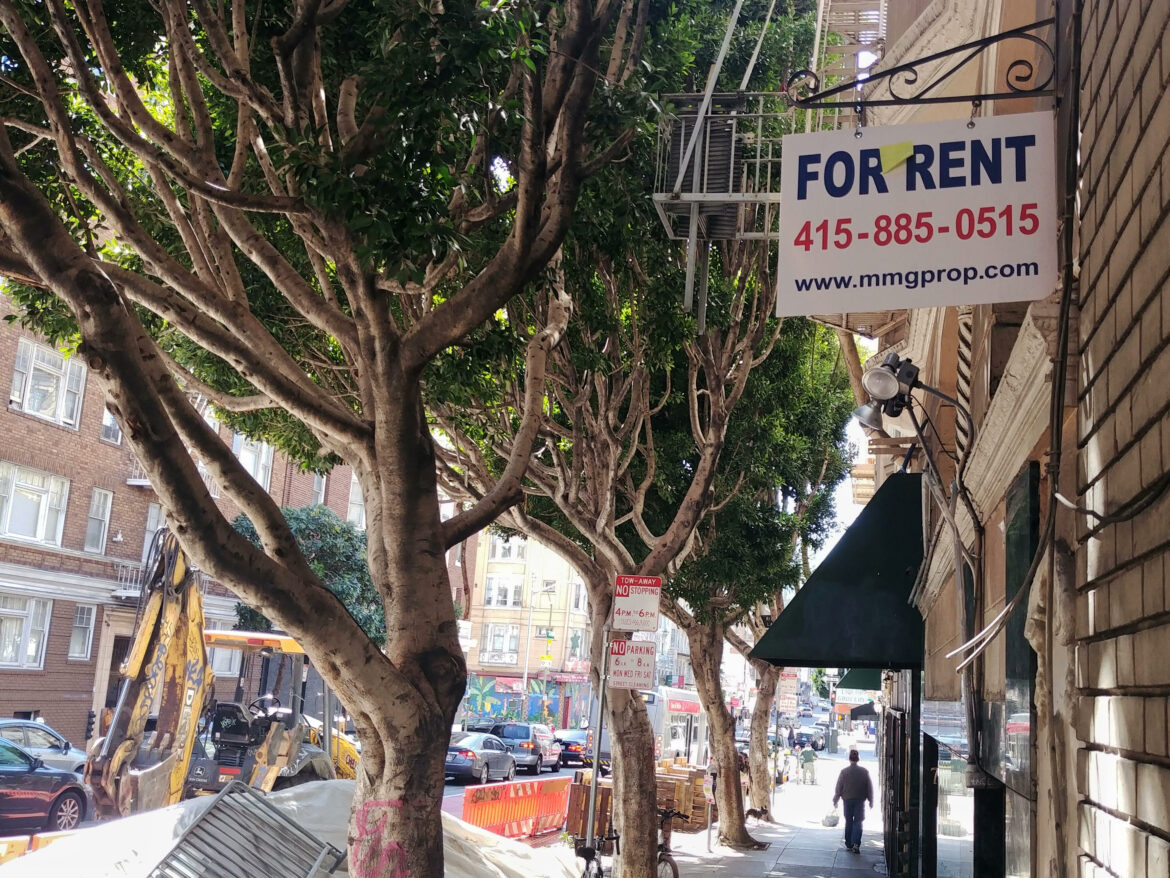
FOR RENT sign in the Tenderloin.

Many tenants have incurred huge rent debts to stay in their San Francisco apartments. Others have left the city, precipitating a large number of rental signs in areas like the Tenderloin.


Tuesday, April 13, 2021

Homeless Paid To Clean Up - SF Should Follow Suit

As featured in ABC7 News:

ELK GROVE, Calif. -- A pilot project in a California town is paying homeless residents to tidy up their living areas, and it's changing the culture of the city.

The idea stemmed from a conversation with one of the city's police sergeants, said Sarah Bontrager, the housing and public services manager for Elk Grove, a city of 174,000 people located 15 miles south of Sacramento.

"We got together to talk about homelessness, and from my perspective I wanted to build better relationships with people who were experiencing homelessness, and he wanted to address some of the complaints that come to his officers," Bontrager told CNN.

The number one complaint surrounding homelessness was the amount of trash.

"Our public works staff were previously doing cleanups out at encampment sites ... and just spending a lot of time and money doing it. We also wanted a way to reduce interactions at the early stages of Covid," she said.

So they came up with the idea to offer an incentive to those who live in the homeless encampments to clean up their area so staff could spend less time picking up trash.

"We distribute trash bags, and we go out every two weeks to pick up the trash, and if they have it bagged, they are eligible for up to $20 in gift cards to a grocery store," Bontrager said.

The recipients can use the gift cards on anything but cigarettes and alcohol. Bontrager said that they usually use them for food or hygiene items. Many of the homeless residents have expressed how thankful they are to be able to go pick out items themselves instead of relying on shelters or other charitable organizations, she said.

Bontrager said that the program has significantly improved the relationship between city officials, like police officers, and the homeless community. They have even been able to find housing for some of the participants.

Besides the social benefit, it saves the city a lot of money for the same work. In almost a year, Bontrager said the program has used only $10,000 of its $15,000 budget. She said the city's efforts cost at least $1,000 every time the city cleaned up an encampment.

"It would cost easily $1,000 in staff and equipment, so we are saving thousands of dollars to them put back into other city projects," she said.

Overall, Bontrager said that what sets their program apart from some others that have similar structures, is that theirs is the only one she knows of that gives incentive for taking care of their own space.

SF homeless team up to keep streets clean – The San Francisco Examiner


Tuesday, April 6, 2021

The Year in Review: San Francisco Tent City

Featured in Street Sheet:

When San Francisco’s COVID-19 health order was released in March 2020, requiring residents to shelter-in-place, it included one paragraph specifically exempting those experiencing homelessness. Immediately, that paragraph raised a question: How could someone without access to shelter protect themselves from the deadly virus? The Centers for Disease Control issued guidance that tents could provide an important barrier between neighbors to prevent the virus’s spread. Hundreds of tents were donated and distributed by community organizations.

Some housed neighbors started to complain about encampments in front of their homes and businesses. Service providers such as Homeless Youth Alliance in Haight-Ashbury wrote a proposal for an organized encampment that would provide access to bathrooms and showers. Mother Brown’s in the Bayview temporarily took over MLK Park to provide adequate space for tents to be spread 12 feet apart. Lawsuits were even threatened and filed, including one from UC Hastings College of the Law demanding that the tents be removed from sidewalks. Advocates organized protests, and the Board of Supervisors passed legislation requiring the city to open 8,250 hotel rooms to folks who were living on the street and being emptied out of cramped shelters.

In May 2020, the Mayor and the Department of Emergency Management (DEM) finally responded by opening only 2,000 hotel rooms for those deemed most vulnerable to the virus. DEM also began fencing in the parking area between the San Francisco Main Library and the Asian Art Museum, where a large tent encampment had started to grow. Urban Alchemy took over the area’s management, assigning each tent one of 50 squares marked on the pavement; this was announced to the public as the city’s first “Safe Sleeping Village,” or SSV. Media interest in the campsite was intense, with TV crews sending up drones to take photos of the camp from above.

“It has been a breath of fresh air for me to be here. A respite. I have started school and finally have an opportunity to get on my feet because I’m not sleep deprived and I feel safe.”

Jasmine, 33, resident

In Haight-Ashbury, the Homeless Youth Alliance (HYA) was allowed to open a similar site at 730 Stanyan, where a McDonald’s recently closed. This SSV had space for 40 tents, and immediately HYA had a waitlist of local folks who wanted the spots. The attraction was clear: bathrooms, showers, access to necessary sanitation during a deadly pandemic, and no more daily visits from local police. The residents of the SSVs would also receive meals three times a day, supplied by the Salvation Army. The city encouraged SSV residents to stay sheltered inside the fenced walls, and wanted to provide meals and bathrooms to discourage folks from leaving to prevent the risk of the Covid virus spreading.

Campers for the most part welcomed the change. “I am grateful for this place,” said Mister E, 37, a resident of HYA’s camp. “It feels like a cocoon where I’m getting some healing and nurturing. As you allow us to be more humanized, we respond to the opportunity. I am a veteran, and when I’m out on the street I can’t sleep because every little sound and potential danger keeps me from relaxing. Being able to lay down and sleep and get rest is really healing for me.” 

“I love having the ability to use the bathrooms and the showers and having a safe setting so I can go take care of things outside of here like food stamps, legal issues, and other things that need to get taken care of. The staff helps us and reminds us of appointments and organizing all of the things I need to do. If I didn’t have help I wouldn’t be able to accomplish a lot of the things I need to get done. It makes the biggest difference. If I was still out on the street I wouldn’t have gotten any of that done.”

Lou, 35, resident

Safe Sleeping Villages were expanded to more than 200 campsites. A scaled-down model, a Safe Sleeping Site (SSS), was introduced. These usually have a bathroom and handwashing station but lack showers and food service, and are staffed with a single security guard instead of a service provider. A short-lived site was set up at a middle school in the Castro but quickly closed down when plans for school reopening began to be discussed. For the most part, the SSVs accomplished what they set out to do — containing the coronavirus — as no major outbreaks were reported in the 10 months of their existence.

Now comes the city’s reckoning with  the sites’ future after the COVID health crisis ends. Will they be allowed to remain? Will the city expand the SSV model, just as it announced plans for opening more Navigation Centers? Supervisor Rafael Mandelman has proposed in his “Place for All” legislation that the city study the question. Advocates have expressed concerns that most homeless individuals surveyed preferred the SIP hotels and housing. But should the city leave open some of the hundreds of campsites for the small number of people who prefer a tent to sleeping indoors — or as a transition until the city acquires more housing? The months and years ahead will answer these questions.

Homeless tent camps finally allowed on the streets of San Francisco due to  the coronavirus pandemic - YouTube


Tuesday, March 30, 2021

Night Ministry's Open Cathedral Returns

Please support the San Francisco Night Ministry - here's their post:

Open Cathedrals Return

Announcement
From Rev. Monique Ortiz


We are coming back!!!
SF Night Ministry Open Cathedrals will resume for Holy Week!
 

Maundy Thursday @ OC-Mission

We hope you will join us for Open Cathedral – Mission as we return to in-person Worship on Maundy Thursday, April 1st at 5:30 P.M.  located on the Southwest Bart Plaza of 16th and Mission Streets.  We will hold our traditional “Foot-washing” Service followed by serving a meal to all.

Most scholars agree that the English word Maundy in that name for the day is derived through Middle English and Old French mandé, from the Latin mandatum, the first word of the phrase "Mandatum novum do vobis ut diligatis invicem sicut dilexi vos" ("A new commandment I give unto you, That ye love one another; as I have loved you"), the statement by Jesus in the Gospel of John 13:34 by which Jesus explained to the Apostles the significance of his action of washing their feet, is expressed in our dedication to love and service.
 

Easter Sunday @ OC-Civic Center

We invite you as well, to join us in the grand celebration of Easter Sunday and the Thirteenth-Year Anniversary of Open Cathedral – Civic Center as we return to in-person Worship on April 4th at 2:00 P.M.  We are located in the pocket park of the UN Plaza at Leavenworth and McAllister streets (near the fountain).  Upon the conclusion of Service, lunch is offered to all.
 

We are always looking for partners in ministry to provide the meals for our weekly Thursday and Sunday Open Cathedrals. Please contact the Rev. Monique Ortiz, Director of Community Programs at ortiz@sfnightministry.org

Contact Rev. Monique Ortiz

CONTACT TO PROVIDE A MEAL

You call us to live your life,
follow where you have trod,
be your presence in these streets,
show compassion to the poor,
support the weak,
embrace the outcast,
bring lives into your kingdom.
Yet our hearts are troubled,
we are fearful of the task,
deafened to your promise
to be with us
wherever we might go.
Forgive our timidity,
grant us peace for the journey,
and strength for the day,
that we might demonstrate our love
in the life we live and share. Amen

Faith & Worship – John C. Birch


Tuesday, March 23, 2021

SF Creates New Office Tasked With 2000 Permanent Homes for Homeless

Story by the San Francisco Public Press:

A new city agency, founded in the wake of rising concerns about the Department of Homelessness and Supportive Housing’s ability to house the city’s homeless population, aims to bring 2,000 people into permanent shelter by the end of the year.

The Office of Housing Opportunities will be a division of the COVID Command Center, shifting responsibilities away from the homelessness department. Of particular focus will be housing the 1,880 residents of the shelter-in-place hotels, a program launched in 2020 to bring indoors vulnerable homeless people during the pandemic. Directing the effort is Chris Block, formerly the director of the chronic homelessness division at Tipping Point, a nonprofit focused on battling poverty and homelessness.

It’s unclear how the office will be funded, or if it will receive any portion of the Department of Homelessness’s $562 million annual budget. Through the city’s communications hub at the Department of Emergency Management, a spokesperson who would not divulge their name declined to answer questions about either agency’s budget or staffing.

However, the new office has already begun reaching out to community partners about its mission. “The guiding philosophy of the new office is that San Francisco actually does have the resources, creativity, and political leadership to house many more people, and in a much faster timeframe, than it has been historically able to do,” Block said in a presentation shared during a meeting with housing service providers Thursday.

The new office’s origins

Block appears to have started laying the groundwork for the new agency in February, if not before. On Feb. 15, he emailed service providers outlining how he would address concerns that 50 organizations raised in a letter sent to Mayor London Breed — not to him — five days before. Breed did not respond to the service providers’ letter until this Thursday. She summarized what the department has done during the pandemic but addressed few of the providers’ concerns.

In the letter, providers requested increased collaboration with the city, faster placement of hotel residents in housing and reduced vacancies in the city’s permanent supportive housing stock.

In Block’s letter, he referenced all three points. He noted “the current spike in vacancies and the terrible relationship between housing providers and the Department of Homelessness,” and wrote that progress “will require the Department of Homelessness to relinquish control which it has taken because of a misguided belief that controlling the process will assure success.” Instead, he suggests the department handle contracts, but outsource the day-to-day responsibilities for housing the city’s homeless population.

When he sent the February letter, Block was still a director at Tipping Point, which has close ties to the city’s homelessness department. Interim homelessness department director Abigail Stewart-Kahn, who this week announced she would leave the agency in May, was listed as a “Tipping Point Community Fellow” during most of the first three years of her tenure at the city agency.

The new office “will allow the Department of Homelessness and Supportive Housing to be freed from this temporary COVID response and instead be able to focus on longer-term initiatives like implementing the Mayor’s Homeless Recovery Plan, planning for the next round of Prop. C allocations and re-inflating our shelter system once our health orders allow us to do so,” a COVID Command Center spokesperson, who declined to be named, said in an email.

Proposition C, passed in 2018, increased funds for homelessness services by about $300 million annually. The Mayor’s Homeless Recovery Plan aims to create 6,000 indoor placements for homeless people through shelters and housing acquisitions.

The Office of Housing Opportunities set the goal of housing 2,000 people by the end of 2021 “no matter what” according to Block’s presentation. The presentation described a wider scope of responsibilities than outlined in the city’s email, indicating that in addition to fast-tracking the process to house people in shelter-in-place hotels, the office will be a “central entity coordinating placement for all populations experiencing homelessness.”

Breed appointed Stewart-Kahn to head the agency on March 5, 2020, less than two weeks before the city began sheltering-in-place due to the COVID-19 pandemic. Sam Dodge, who led the Department of Homelessness and Supportive Housing during its first year of creation, will step in as acting interim director when Stewart-Kahn leaves.

Missteps in city’s approach to housing homeless

The change in leadership and creation of the Office of Housing Opportunities comes after a fraught year of political battles across the city, as the department, supervisors and the mayor’s office argued over how to house people experiencing homelessness during the pandemic. Supervisors passed an ordinance requiring the city to put more people living in shelters or on the streets in empty hotels that eventually became known as shelter-in-place hotels, only to have the directives disregarded by the mayor and administrators.

Recently, the Board of Supervisors approved an emergency ordinance to bring more people off the streets and into the shelter-in-place hotels, and undo a Department of Homelessness and Supportive Housing policy that bumped people living outdoors to the bottom of the housing list.

At the same time, the vacancy rates in the city’s permanent supportive housing stock have risen far beyond its department’s goal of 3%. In January, 766 units — nearly 1 in 10 — were vacant, while 1,200 people approved for housing sat on the waitlist.

Block has extensive experience navigating the bureaucracy required to get homeless people into housing. Prior to his involvement at Tipping Point, he was the founding director of coordinated entry — the system by which homeless people are assessed and prioritized for housing — at Episcopal Community Services. He did not respond to text messages and phone calls requesting comment.

Dodge, who takes over as interim director the Department of Homelessness and Supportive Housing in May, called Block “a proud father and a nice person who also happens to be a great leader in solving homelessness.”

“This to me was an excellent hire,” he said in an email. “He has already reached out and I look forward to working together.”

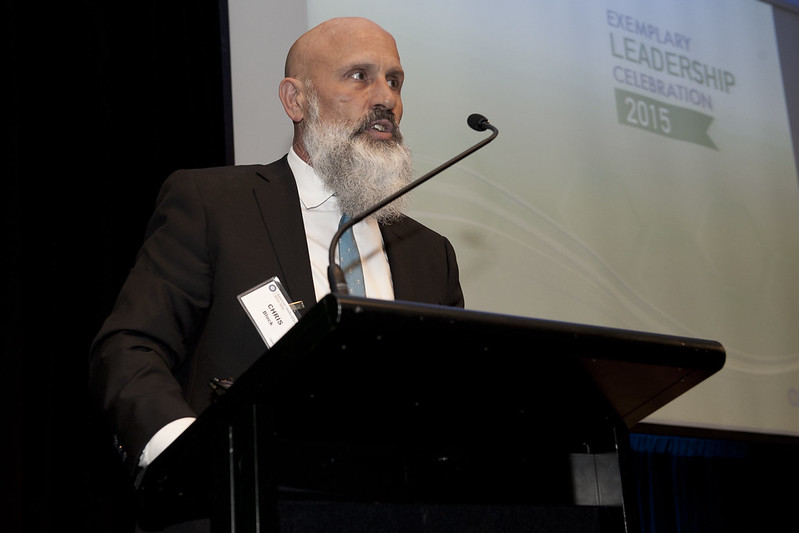
Chris Block speaks at a podium in front of a projector screen

Chris Block, who directs a homelessness initiative at the nonprofit Tipping Point, will take over a new homelessness agency created by San Francisco.