Tuesday, October 19, 2021

Pandemic & Now Crippling Inflation - Please Volunteer

Due to swift rises in inflation, the @SFMFoodBank has seen a 20% increase in hungry people needing food - and that's just at one pop-up pantry in the past week alone! Please do your part, pay forward and sign up to volunteer. Just two hours once a week keeps stomachs full. Supermarkets have already confirmed that food prices will rocket even higher, items will be scarce due to the supply chain collapse and essential foods will be classified as a luxury item. In the past two weeks, vegetables have tripled in price, heating bills will be at least 50% higher (per month) and people will have to choose if they can afford to eat or stay warm. It's a real problem that's not going away any time soon and will affect the entire planet shortly.

So please click here to volunteer for the SF Marin Food Bank - at the warehouse or a pop-up pantry. We must all do our part because during these turbulent times, we cannot come out the other side saying we didn't help someone else. This is a great testing period in our lives and if you can't even give 120 minutes, once a week to pay forward, then you'll fail the test. Please share this post because this is a pivotal moment where everyone must rally together.


Thursday, October 14, 2021

Poll finds more than half of Bay Area residents plan to leave for good.

Why? 'It's housing, stupid'


Featured in the San Francisco Chronicle:

Another day, another poll about how expensive it is to live in the Bay Area.

Only this time, San Jose think tank Joint Venture Silicon Valley found a majority of residents actually planning to leave the region in “the next few years” — around 56% of more than 1,600 people surveyed in five counties. That compares to a broader pre-pandemic poll of all nine Bay Area counties by business group the Bay Area Council, which in 2018 found that 46% of residents considered moving away.

While there’s no shortage of factors contributing to today’s uncertainty — remote work, peak wildfire season, a lingering global pandemic — the report authors zeroed in on one key motivation.

“It’s housing, stupid,” said Russell Hancock, president and CEO of Joint Venture Silicon Valley. “That is driving almost all of the results we see in this poll.”

The new survey, which was conducted online in late September by polling firm Embold Research, highlights a growing tension between the Bay Area as a beacon of job opportunities but a place that looks a lot like a financial trap for both renters and aspiring home buyers. While the concerns aren’t new, Hancock said the big question is how many people may be newly emboldened to leave as the pandemic wanes.

Among the registered voters surveyed in Santa Clara, San Mateo, Alameda, San Francisco and Contra Costa counties, 71% said the Bay Area is still a “good” or “excellent” place to pursue a career. But only 45% said it’s an appealing place to raise a family. A mere 11% were optimistic about buying a house here.

Around 90% of respondents expressed concerns about housing, cost of living and homelessness. Across the board, just 48% of those polled said they believe the Bay Area is “moving in the right direction.”

“As a pollster, I don’t tend to see a lot of consensus,” said Alex Chen, a data analyst at the Silicon Valley Institute for Regional Studies. “But there are some very strong signals here.”


Monday, October 4, 2021

Eviction-free SF: Know your rights

Featured in 48 Hills:

Eviction-free SF: Advocates say that renters still have options

Know your rights - the moratorium is over but renters have a lot of remaining protections.

Tenant advocates and District 5 Supervisor Dean Preston announced Friday the launch of an outreach campaign to inform tenants in District 5 of their protections against evictions - one day after the September 30 end of the statewide moratorium on evictions for non-payment of rent.

“District 5 will be an eviction-free zone as we move into the next stage of this pandemic,” Preston said.

Preston’s outreach campaign is partnering with Daybreak PAC, founded by former state Senate candidate Jackie Fielder, and will use its automated texting services and pool of volunteers to call District 5 residents to inform tenants of the eviction protections still available to them.

“When we learned about this effort by Supervisor Dean Preston we wanted to pitch in and offer our resources and volunteers to call every resident in District 5 and inform them of their rights,” Fielder said.

Although non-payment of rent evictions are allowed to proceed, as the state moratorium preempted the city from passing its own rent non-payment eviction ban, advocates reminded renters that evictions other than those related to non-payment of rent, violence, or health and safety issues, such as owner move-in, capital improvement, or demolition, will remain banned in San Francisco, thanks to a recent ordinance unanimously passed by the Board of Supervisors on Tuesday, which will last 60 days once it is enacted.

Advocates say that reaching out to inform tenants about how they can avoid eviction is especially important as COVID continues to spread and mutate.

“No one should be evicted right now because we are still in the middle of COVID. The best way to take care of yourself is to have protection in your home,” said Fred Sherburn-Zimmer, executive director of the Housing Rights Committee of San Francisco, speaking on behalf of the Anti-Displacement Coalition.

While the state eviction moratorium for rent non-payment is over, the state’s $5.2 billion rent-relief program, which disburses funds to eligible tenants to pay back rent and utilities, is still active, and an open application for rent relief can be used as a defense if your landlord take you to court over an eviction for non-payment, according to advocates. Renters who make 80 percent or less of the Area Median Income and swear under penalty of perjury that they have been impacted financially by the pandemic are eligible.

In San Francisco, a family of four with annual earnings less than $106,550 would qualify under the AMI requirement.

Non-citizens are also eligible for rent relief, and an applicant’s immigration status will not be disclosed to any other agency. You can apply through the state’s Housing is Key website.

“Tenants have more protections now than they ever had,” Sherburn-Zimmer said.

What is key, according to advocates, is that people get their applications in as soon as possible, while funding is available, as the application itself will confer protection to you, even if it takes months for a check to arrive.

“Getting your application in, is actually what protects you from getting evicted right now,” Preston said. “Even if it takes two, three months, to cut the check for that back rent, if you as a tenant have gone onto the Housing is Key website, and if you have applied for relief, your landlord is not allowed to move forward and evict you while that is pending.”

According to Maximilian Barnes from the Mayor’s Office of Housing and Community Development, applicants should receive rental assistance within four to five weeks of applying.

What is important to remember, however, is that if a tenant is missing information on their application, it is up to the tenant to respond within 15 days to call and email updates notifying them of that missing information, which can land in their spam folder or come from unknown phone numbers, and to make sure that they add that information within that time period, otherwise their application may be closed without further notice and they will not receive rental assistance.

Advocates acknowledged that part of the reason that lack of information on protection and confusion around tenants’ rights is so widespread is because eviction protections have changed frequently throughout the pandemic, with different moratoria imposed at the federal, state, and local levels, leaving both landlords and tenants confused about what eviction protections exist.

“If you have a blanket ban on evictions, and you let all the landlords know, then there’s less likely that landlords will go forward, but if you do what California has done, and forced the city into, this constant maze of rules that’s constantly changing, it’s shifting the burden of learning the rules and exercising the rights onto the tenant,” Preston said.

Landlords have also expressed confusion about the swath of eviction protections for tenants as well as opportunities for landlords to receive compensation for back rent owed by their tenants.

Joshua Howard, executive vice president of local public affairs at the California Apartment Association, said in an email statement that all of the differing local regulations can cause confusion among landlords.

“Local governments make landlord-tenant laws more complicated and confusing. The state provided comprehensive protection to all renters, but some cities and counties tried to be more restrictive, creating confusion for both landlords and tenants,” Howard said. “That’s why the COVID-19 Tenant Relief Act was so important: It provided equal and consistent rules across the state. Tenants need only apply for rental relief, and they are protected from eviction for nonpayment of rent.”

What is also important for renters to know, according to advocates, is that all tenants facing eviction have a right to an attorney, thanks to Prop F, passed in 2018. While there have been issues with funding the Tenant Right to an Attorney program in the past, the city’s most recent budget allocates $6 million to bolster the program.

“This is not a great time for tenants, but at the very least, there are more protections in place, there are more lawyers, there is more money for rental assistance,” said Martina Cucullu Lim, executive director of the Eviction Defense Collaborative.

(NB from SF CARES: Remember, if you can pay at least the minimum owed for the rent you've not paid during the pandemic, pay it. Over 50% of landlords sole income in California is from renters. So please be ethical, don't hoard, get a job - they are in abundance - and be a responsible tenant that pays for the roof over your head).


Friday, October 1, 2021

Rent Payments to SF Public Housing Agency Plunged in Last Two Years, Spurring Eviction Fears

Featured in the San Francisco Public Press:

Rent collections by San Francisco’s public housing agency fell precipitously in late 2019 and have continued to decline to less than half of what is owed, according to a San Francisco Public Press analysis — but the agency can’t explain why.

Only 47% of rent paid directly to the Housing Authority was collected this July, the latest month for which data is available. The 974 households whose units are managed by the agency — the rest pay rent to private management companies ­— pay roughly 30% of their monthly income, or $489 on average. These residents owe at least $4.5 million in back rent to the city.

Officials at the Housing Authority said they could not provide an explanation for why the shortfalls in rent collections began increasing in September 2019. Nor could they say why San Francisco’s Housing Authority has a far higher rate of delinquencies than parallel agencies in other big cities, some of which are collecting as much as 98% of the rents due.

“Prior to the onset of the pandemic, the authority robustly embraced local efforts to keep people housed and worked with households to enter them into payment programs if they were struggling to keep up with their overall expenses,” Rose Dennis, a Housing Authority spokeswoman, said in an email. “This may have impacted pre-COVID rent collection.”


The shortfall illustrates the continuing financial challenges for both the city and its poorest residents in the midst of a global health emergency. One in 20 of the city’s residents has been infected with the virus, and at least 605 have died.

Thousands of people have lost income, and only the imposition of city, state and federal limits on evictions has prevented them from losing their homes. At least 75,000 of the 200,000 renters in the San Francisco area who are behind on their monthly payments believe they will be evicted within 60 days, according to an August Census Bureau survey. The San Francisco metro area extends out to include San Rafael, Livermore, Redwood City and cities in between. Public housing residents, with an average annual income of $18,800, have been among the hardest hit, according to data from the U.S. Department of Housing and Urban Development.

Rent formula punishes success

Monica Ferrey, a former resident of Potrero Terrace Annex, a Housing Authority development in Potrero Hill, estimated she fell behind on her rent as her income started to rise.

“I thought there was a grace period,” said Ferrey, vice president of the city’s Public Housing Tenant Association. “I was shocked.”

Her rent soared from $200 to $1,550 last November after she found work, since she reported higher income. Ferrey, who works as a community development specialist for the city’s Recreation and Park Department, thought she could fill gaps with a few part-time jobs. But life during a pandemic intervened. She found the needs of her four children, one of whom is too young to be vaccinated, were too great, forcing her to cut back on the part-time work. Car trouble added to her woes.

Now she’s at least $6,000 in arrears, Ferrey estimated. “I got to a point where I really don’t care about it,” she sighed.

She noted that as of August the agency is “working on having residents do a declaration that should significantly reduce what is owed.”

Records show the increased delinquencies predated the pandemic by several months. The number of Housing Authority residents paying rent on time dropped from 87% in September 2019 to 59% in November. In March 2020, when Gov. Gavin Newsom declared a pandemic-related state of emergency, it stood at 65%.

The shortfall in collections was not mirrored at other large public housing authorities. In July 2020, for example, San Francisco collected 56% of rent due, while the New York City Housing Authority collected 86% of rent. Chicago took in 91%. Los Angeles housing officials said they collected 96% of rent due in July 2020, and Denver and Houston both collected 98%.

Despite federal government stimulus payments that amounted to as much as $3,200 per adult — sent in April 2020, December 2020 and March 2021 — rent collections topped 60% only once in the last 15 months, in June 2020.

Eviction threat looms

Deborah Thrope, deputy director of the National Housing Law Project, said an increase in the number of tenants who owe back rent is a red flag that indicates problems with a city’s housing authority. Often, housing authorities don’t communicate the need for tenants to “recertify” or notify them when circumstances change, Thrope said, and tenants can wind up owing thousands when rent is raised after they get a new job or increased wages or benefits.

“Post-pandemic, nobody should be evicted for rent they didn’t pay,” she said. “It’s related to COVID loss of income and loss of employment. There is absolutely no reason at this point that public housing tenants should be evicted for nonpayment of rent.”

In a non-pandemic situation, residents who do not pay rent can expect rent collectors to follow up with phone calls or home visits. If it is still unpaid, the authority can issue 14-day notices, letting them know that they need to pay the balance or move out. If they still cannot pay, they are eventually evicted. Residents behind on their rent also are not allowed to be considered for moves to newer or larger public housing units.

“The authority is working closely with resident service providers and residents to request rent relief where available,” said Dennis, the Housing Authority spokesperson. “During the pandemic time frame, the authority has not issued notices to residents, prioritizing client health and housing stabilization instead.”

More than two-thirds of public housing residents live on “other incomes,” such as modest pensions or Social Security retirement or disability payments, according to the U.S. Department of Housing and Urban Development. Another 5% eke out a meager living with welfare benefits. The remainder — like Ferrey, the struggling tenant association vice president — support themselves with jobs that come and go.

“It’s like, every time I kind of begin to catch up,” she said, “I just fall behind again.”


Wednesday, September 22, 2021

Notorious McDonald's site in S.F. is becoming a homeless center

Featured in the San Francisco Chronicle:

For years, many Haight-Ashbury residents have yearned to see affordable housing rise on the old McDonald’s site on the corner of Haight and Stanyan streets, right across from Golden Gate Park.

The city bought the troubled site more than three years ago to build affordable housing in an area that has long struggled with homelessness. But with delays in the housing project, the city has a new plan for the site — one that doesn’t get closer to a permanent solution.

City officials now say it will be used as a temporary drop-in center to provide services for homeless people starting in October. Some neighbors — worried about problems on the streets over the past year — are resisting.

Even supporters of the plan to create a drop-in center say the saga highlights the incredible cost and difficulty in building affordable housing. Recently, the city delayed construction at the site, 730 Stanyan St., for a year to expand the project.

“The drop-in center is a needed and important and critical safety net — it is not the sole solution of what we need to do as a city to address the needs of young people experiencing homelessness or our unhoused neighbors in the Haight,” said Sherilyn Adams, executive director of Larkin Street Youth Services, which served nearly 400 homeless youths in the neighborhood last year. “We need housing. We need to be able to build it faster. I worry about all delays related to the creation of housing in our city.”

Despite support at the highest levels, building affordable housing in San Francisco takes years and costs millions, leaving the city to scramble for short-term solutions to homelessness. That was especially true last year when the pandemic closed shelters, leading to a spike in tents on the streets and heightened health risks.

Amid that environment, Haight-Ashbury became a microcosm of citywide debates about how to alleviate homelessness. Hundreds of unhoused people live in supervisorial District Five, according to the city’s last count. While there seems to be a consensus of support for affordable housing at 730 Stanyan, what to do with the empty lot has been a lightning rod in the community.

The proposed drop-in center will include toilets, sinks, showers and referrals to long-term services, run by a nonprofit that hasn’t been chosen yet by the city’s homelessness department. It will fill a gap left by the closure in June of a city-run tent encampment that operated there for a year. The site offered food, hygiene and 40 secure tent spots. The site, always envisioned as temporary, closed once everyone was offered housing.

Supervisor Dean Preston, who funded the drop-in center with $223,000 in city funds, said he’s determined to make sure some services continue at the site.

“We’ve seen far more support than opposition to have these essential services for unhoused folks in the community,” Preston said. “Of course there are certainly some folks who will oppose any services for homeless folks in the Haight.”

Flip Sarrow, who lives at Haight and Clayton streets, said he didn’t have a problem with the safe sleep site. But he described a “sanitary mess” in the neighborhood over the past year with “tents all over the place” and a “big brawl” he recorded on video. He said a “silent majority of people are very wary” of similar problems with the new proposal.

“There’s always a need, but is it a need just for the Haight, or are we inviting people from everywhere to get services, creating a mecca for people who have various problems?” he said. “There’s a need, but the concern is how is it run and will they take care of the surrounding area?”

The main goal is to provide hygiene for homeless individuals and connect them to other services.

Jason McClain, sitting at the corner of Haight and Cole streets Wednesday, said as someone living on the streets, he would welcome more showers and restrooms. The only public toilet in the neighborhood isn’t open 24 hours a day, forcing him to sometimes relieve himself in the park or the neighborhood.

McClain moved from St. Louis to the Bay Area in March to look for a job with his computer science degree. He became homeless when housing with a family connection fell through. Now he spends his days at Kezar Stadium charging his phone to apply for jobs before falling asleep in a parklet at the Alembic bar.

McClain is in the process of getting cash assistance from the county but is skeptical of getting help with a place to live.

“I don’t know how much housing they have right now,” he said. “This can’t be the rest of my life.”

730 Stanyan is supposed to be part of the solution.

The city bought the property, formerly a McDonald’s that was a magnet for crime, in 2018 to build affordable housing. In April, the city told the developers it had more funding to increase the number of units from 120 to 160, raising the cost from $80 million to around $100 million.

Construction will be paid for with a combination of local, state and federal affordable programs. If funding is approved next year, groundbreaking will be in 2023 instead of 2022 as originally planned.

“Even if it does set the project back a little while, it’s still good to add more units while we can,” said Bo Han, a project manager at Chinatown Community Development Center, one of two nonprofits developing the site. “It will be one of the first important large affordable housing projects that’s further west than we have been building.”

The delay frustrated Preston, although he supports more affordable units. It’s also drawn out community debate about what to do with the empty lot, which the city is currently paying security to guard 24/7. The city took ideas for interim uses two years ago, but nothing happened before the pandemic, when the safe sleep site provoked fierce neighborhood debate.

Preston said early critics “had come around,” leading to an “overwhelmingly positive response.” He and advocates called it one of the most successful sites in the city because it was run by two local nonprofits with community relationships.

Some neighbors agreed. Adam Burman, who has lived on Waller Street for two decades, joined regular community meetings and said the organizations in charge did a “terrific job.”

While the site wanted to connect people staying there to housing, the reality was more challenging. Out of the 73 people who stayed during the year, 24 were rehoused and 29 ended up in emergency shelter. Adams said the outcomes were “pretty good” considering constraints in the city’s system for placing people in housing, which moved more slowly than usual during COVID and wasn’t designed to prioritize people living in safe sleep sites.

Preston also said that “fears that there will be all those folks coming from all over to camp outside the Safe Sleeping site did not materialize.”

Some begged to differ. Burman, who didn’t blame problems on the site itself, said he documented a spike in tents — up to 20 at a time — on Waller starting in March 2020. He described an “extremely challenging” and “dangerous” situation with drug paraphernalia, human waste and trash. Problems continued until December, when he said the city swept the tents on Waller while offering housing.

News about the drop-in center, announced at a community meeting in August, was a “complete surprise” to Burman. He was frustrated by the lack of information, but wanted more details about who it would serve and the need before forming an opinion.

“I have tremendous compassion for homeless people,” Burman said. “I want to be part of the solution.”

Sarrow said he wasn’t outright opposed to the new proposal, but feared another “explosion of problems.”

Christin Evans, a business owner, resident and homeless activist in the neighborhood, pegged complaints on groups who “just want the police to simply push people away.”

Adams cautioned against conflating homelessness and illegal activity. She and Preston said tents did increase at the start of the pandemic, but any issues were alleviated — not exacerbated — by the safe sleep site.

They both separately said the pandemic showed the success of some temporary solutions to homelessness for people living in the Haight. Some of them, including a shelter-in-place hotel for youth with vulnerable medical conditions, already closed in June. They hope the drop-in center will be a stop-gap measure until more housing is built.

“We need a lot of it,” Adams said.

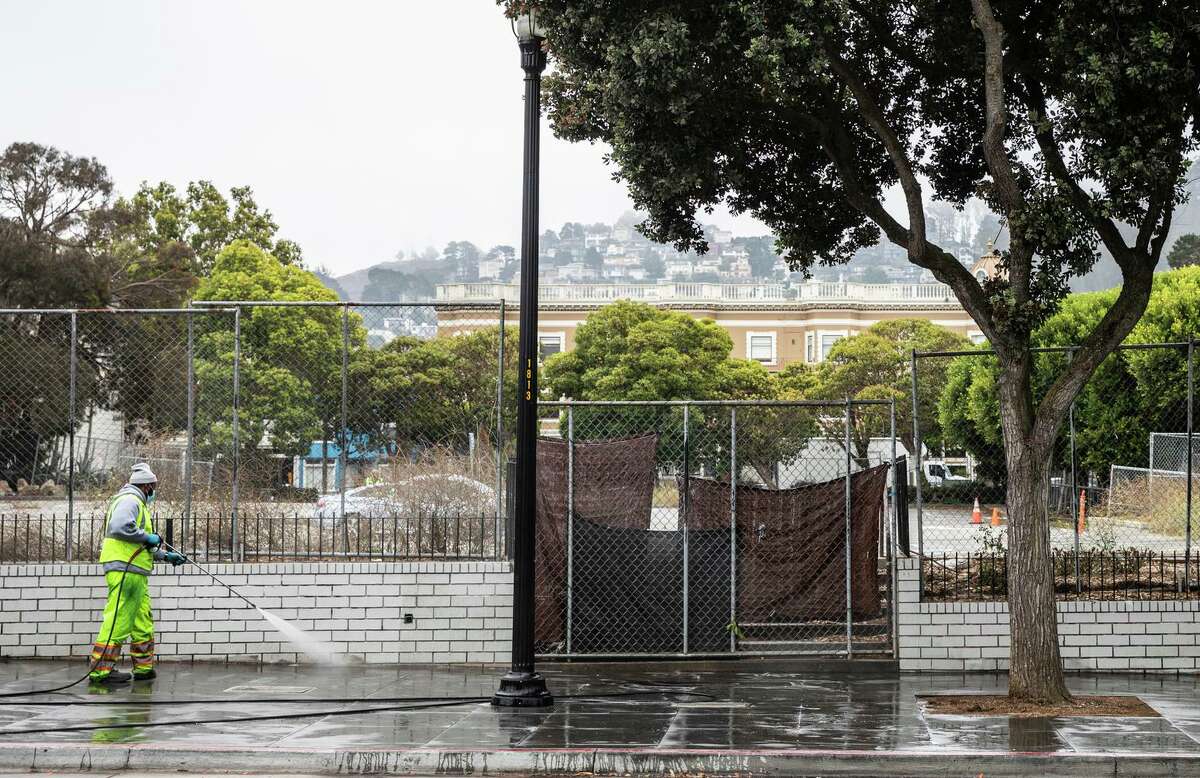
A sanitation worker power-washes the sidewalk next to the empty lot at 730 Stanyan St. in the Haight.


Monday, September 13, 2021

Help Those In Emergency Need After Floral Shop Torched

Floral shop in ruins, robbed and torched after nearly a century in San Francisco

Featured in the San Francisco Chronicle, this is a very sad story of lunacy and criminality destroying the innocent and their livelihoods. We regularly focus on the homeless as that's SF CARES priority, but we must always support those that are now displaced for a multitude of reasons. This is one of them. Please support the Frank's Floral shop owner's GoFundMe. Even $10 would be a great help!

For a windfall of $8, someone broke into Frank’s Floral Shop on Irving Street in San Francisco the other night. They jimmied the back door with a crowbar. They trashed the place and took what meager receipts the cash register had to offer.

And then, they apparently set fire to the place — a Sunset District establishment that for 95 years had supplied bouquets and corsages to brides and widows and new parents in the 19th Avenue and Irving region, as well as city’s broader Armenian community.

The incident at 1821 Irving St. occurred at 12:30 a.m. Sept. 5 and is under investigation as a burglary and possible arson, according to the police and fire departments.

A week later, on Sunday afternoon, the owner of the shop, 66-year-old Sona Pehlivanian, stood in the wreckage. In the pile of charred inventory were some wicker flower baskets, trays of ruined succulents, a melted Rolodex and flowery thank-you notes with curly penmanship.

Pehlivanian said she doesn’t know much about how insurance works, what will be covered or how much it will cost to rebuild the store, which includes a storefront and little office and workspace upstairs. The need will include some new walls, ceilings and staircase, along with new inventory. So far her insurance representatives have not shown up to assess the damage, but offered $9,400, which would barely replace the lost merchandise, she said.

“What’s the landlord insurance going to cover? What about my insurance? Do I fight? Do I hire an attorney? Do I want to start again? By the time this is all finished I’ll be almost 70,” she said. “Should I put in the energy to rebuild, or walk away and keep doing flowers for the church out of my garage? I don’t know.”

Pehlivanian was a recently divorced young mother when she bought the shop in 1987. Then, as now, it had a pizza spot on one side and a liquor store on the other. Until that point, Frank’s Floral had been owned for 60 years by Frank Korkmazian, who along with his wife, Gladys, operated the store and lived in two rooms upstairs.

After Frank died, Gladys ran the business until she sold it to Pehlivanian.

“They did almost everything for the Armenian community — all the weddings and funerals and processions,” she said. “I continued that. They were so happy that another young Armenian girl had taken it over and would keep it going. And I did that for 35 years — until this evil man take it away from me for absolutely nothing.”

Pehlivanian had previously worked at a bank but needed more flexibility to take care of her baby son. The shop offered her that. It was longer hours, but she could keep her child safe and tend to him in a sleeping bag on the floor while she worked. She said she worked 17-hour days and 20 hours on holidays. It paid off.

“As a single parent with a young child, I worked hard enough with the business that I was able to buy a house in the neighborhood after about five years,” she said.

Supervisor Gordon Mar said the break-in was the latest in a rash of commercial burglaries during the pandemic that hit stores along Irving, Taraval and Noriega streets. A print shop broken into on Taraval was also set on fire, and robbers additionally hit Sun Maxim Bakery, Twisted Donuts, Nomad Cyclery and Footprint Shoe Store, which was robbed twice in one night. Mar said he has called for hearings into how to make the retail strips safer. He said he was unaware of any arrests in the break-ins.

“Frank’s Floral really is a historic neighborhood business, and Sona put her heart and soul into it,” he said.

Longtime customer and friend Milly Sheehy said she was heartbroken to hear of the setback.

“This is the most hardworking woman you will ever see,” Sheehy said. “She gets up at 4:30 every day to go to the Flower Market. Oh, she can’t say no to anybody. She helps everybody. She has a heart of gold, that woman, and she is a total giver.”

Dennis Wu, a prominent business leader in the Chinese American community who lives in near the Stonestown mall just to the south of the neighborhood, said he became enamored with the store just recently. Wu got together with Drew Min and Jessica Ho to start a GoFundMe account to raise money for Pehlivanian.

“I fell in love with this woman,” he said. “Some people sing. Some people paint. Some people are great chefs. This woman had just this little flower shop, but she projected love through her fingers and hands.”

The intruder didn’t have the sense to take a gift basket or a bouquet of dahlias before escaping out the back alley, Pehlivanian said. She suspects the person is male, based on what was stolen. The store is still full of ash-covered greeting cards and wedding votives, vases, urns and melted candelabras — not to mention a cooler full of rapidly wilting flowers.

“Men don’t want those things,” she said.

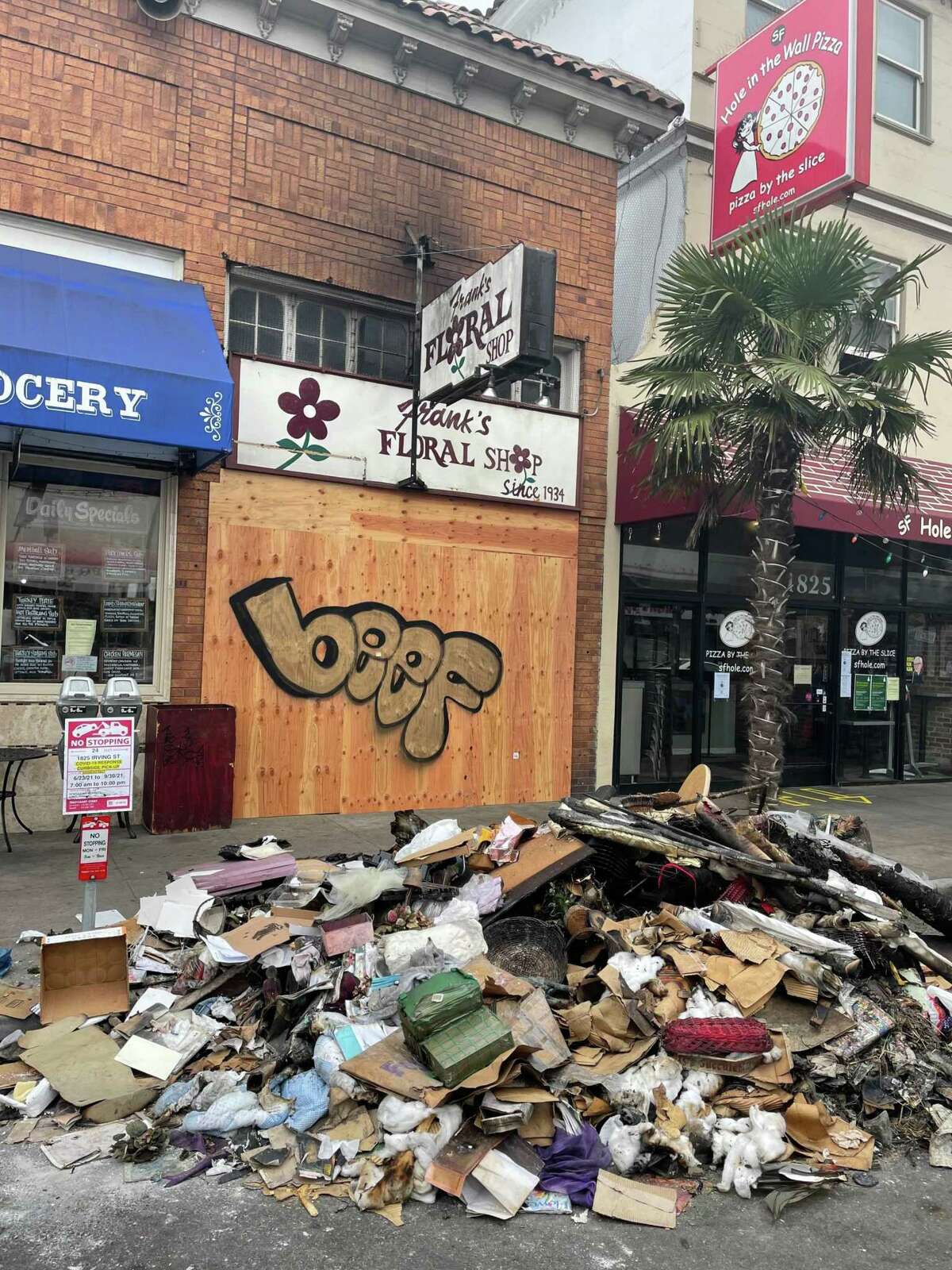
Charred trash is piled outside Frank's Floral Shop in San Francisco after the store was robbed and torched.


Wednesday, September 8, 2021

Will Resistance Stop Japantown Hotel Being A Homeless Haven?

Featured in the San Francisco Chronicle:

S.F. slows down plan to convert Japantown hotel into homeless housing amid resistance

San Francisco officials are putting the brakes on plans to turn a tourist hotel in Japantown into housing for more than a hundred homeless people, after droves of neighbors complained about the proposal.

Many Japantown community leaders, business owners and residents oppose the purchase, worried that losing one of two hotels in the neighborhood will hurt local businesses.

The Kimpton Buchanan Hotel at 1800 Sutter St. is one of four properties the city wants to buy with state money and turn into permanent supportive housing. But the proposal has attracted so much neighborhood opposition that Mayor London Breed’s office said Tuesday that it will give officials a few more weeks for community outreach.

If the project doesn’t move forward, the city could lose a chance to apply for state funding to create 131 units of desperately needed housing in a neighborhood with scant homeless services. Officials said they are considering other properties in the city in case this one doesn’t work out.

“With so many people living on our streets we are committed to moving quickly to buy hotels,” Andy Lynch, a spokesman for Breed said in a statement. “But we also will listen to the community, hear their concerns, and try to incorporate their feedback, which is what we’re doing now.”

In the meantime, Breed introduced a resolution at Tuesday’s Board of Supervisors meeting to approve the acquisition of two other properties — one in the Mission and another in the Outer Mission. Officials are working on the contract for a fourth property in SoMa and plan to move forward on it soon.

The four buildings would add 368 units to the city’s permanent supportive housing stock, in which homeless people pay 30% of their income in rent and receive social services such as case management.

But the resistance in Japantown demonstrates the challenges Breed faces as she tries to spread homelessness services and housing around the city. The overwhelming majority of the city’s shelter, drop-in centers and permanent supportive housing units are in the Tenderloin and SoMa.

“We support supportive housing,” said Richard Hashimoto, president of the Japantown Merchants Association. “But just not in this neighborhood.”

By Tuesday, more than 6,500 people signed an online petition to stop the sale of the Japantown hotel, which is currently a temporary shelter for homeless people during the pandemic.

“They’re not going to spend as much money in Japantown as a tourist would,” Hashimoto said, referring to the would-be tenants who are often living on the margins of society and struggling with mental illness and drug addiction. “That’s a huge economic loss for us.”

Supervisor Dean Preston, whose district includes Japantown, said he is supportive of having “multiple” permanent supportive housing buildings in his district— but he is not convinced the Kimpton Buchanan Hotel is the best location.

“All districts and parts of the city should be part of the solution to providing affordable housing for formerly homeless folks,” Preston said. “But when you get concerns raised by the community, it’s also incumbent to make space for folks to weigh in before making a final decision.”

He said he is “eager” to bring more housing for homeless people to his district, but “we’re not going to do that by ignoring the concerns of residents.”

The mayor hoped the Board of Supervisors would approve the purchases by the end of September, and close on the sale by the end of the year. It is unclear how long she will wait until moving forward on the Japantown site.

But the clock is ticking: The city’s tight timeline is driven by Project Homekey, a state grant program to create homeless housing. The state will start accepting applications on a rolling basis in late September, and local officials are working under the assumption that the sooner they get the applications in, the better.

The city has not yet disclosed prices of the hotels.

Meanwhile, Supervisors Hillary Ronen and Ahsha SafaĆ­ said Tuesday that they both support the purchases in the Mission and Outer Mission.

SafaĆ­ said there are a few community members who are skeptical of turning the Outer Mission tourist motel at 5630-38 Mission St. into housing for homeless people.

But he feels confident that the city will be able to move forward on the purchase.

“Every neighborhood needs to do their fair share,” he said.


NIMBY - Definition, Reasons and Practical Example